Segregating and storing medical waste correctly isn’t just a box-ticking exercise; it’s essential for safety, compliance, and protecting everyone involved in the healthcare waste chain. Yet even seasoned professionals sometimes get it wrong.
The result? Injuries, compliance headaches, and costs that could’ve been avoided.
Here’s a simple guide to help you and your team get it right – safely, confidently, and consistently.
Why Segregating Medical Waste Matters
Getting segregation wrong can have serious consequences:
- Someone could get hurt (usually the person least expecting it).
- Waste ends up in the wrong place, putting staff, waste handlers, and the environment at risk.
- Your facility could face fines or reputational damage.
It all starts with how waste is sorted and stored from the moment it’s created.
1. Start with the Right Medical Waste Categories
Different types of medical waste need to be handled in different ways. The main categories are:
- Sharps waste: Anything that can pierce skin (like needles or blades).
- Infectious waste: Items soaked in blood or bodily fluids (like gloves, dressings, swabs).
- Pharmaceutical waste: Expired, unused, or contaminated meds.
- Cytotoxic waste: Waste from cancer treatments that can be toxic or harmful.
- Anatomical waste: Human tissue or body parts.
- General healthcare waste: Things like paper, packaging, and leftover food.
Always separate waste at the point where it’s generated, don’t leave it for ‘later’.
2. Use the Right Medical Waste Container (Colour Matters)
Each type of waste has its own container. Colour-coding makes it easy for everyone to do the right thing quickly, even on busy days.
| Waste Type | Container Colour | What to Use |
| Sharps | Yellow | Puncture-proof, sealable container |
| Infectious | Red | Sturdy, leak-proof bag or bin |
| Pharmaceutical | Blue | Secure, leak-resistant container |
| Cytotoxic | Purple | Clearly marked rigid container |
| Anatomical | Orange | Strong, sealed container for incineration |
| General Waste | Black or Clear | Standard waste bin |
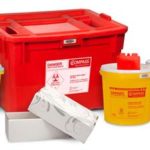
Compass containers are all SABS-approved, colour-coded, and individually barcoded so you can track every step.
3. Store Medical Waste Safely Until Collection
Once waste is sorted, the correct storage is needed to keep everyone safe:
- Label clearly so there’s no confusion.
- Keep containers in a designated area, not in patient spaces or hallways.
- Make sure bins aren’t overfilled – especially sharps.
- Use the correct PPE when handling.
- Arrange regular collections so waste doesn’t build up.
Think of it like this: if you wouldn’t want to trip over it or smell it, it probably isn’t being stored correctly.
4. Don’t Skip the Training
Even with the right containers and labels, mistakes happen when staff aren’t properly trained.
That’s why Compass offers practical training that covers:
- What waste goes where (and why it matters)
- How to seal and label containers properly
- How to avoid common injuries and compliance errors
Proper training isn’t just about ticking boxes. It’s about protecting people, preventing injuries, and making sure everyone is safe.
Quick Do’s and Don’ts
Do:
- Segregate at the source – right where the waste is created.
- Use the correct, colour-coded container.
- Keep waste areas clean, secure, and easy to access.
- Train your team regularly (even the long-service staff can forget).
Don’t:
- Mix different waste types.
- Overfill containers – especially not with sharps.
- Leave containers where they pose a risk to patients or the public.
- Guess. If you’re unsure, ask.
Need Help?
At Compass, we know how easy it is for small mistakes to turn into big problems. That’s why we don’t just drop off bins. We work with you to build safer, more compliant systems that your whole team can follow.
Give us a call or email us if you’d like to review your medical waste practices or organise team training.